

What are the different types of joints used in nesting tables?
Jun 03, 2025
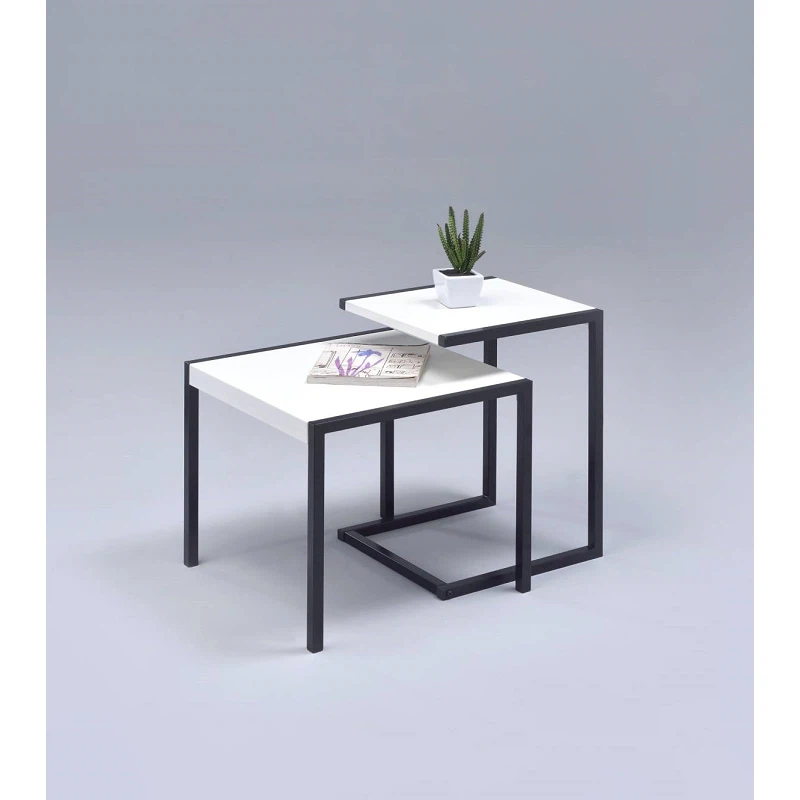
Nesting tables are a versatile and space - saving addition to any living room or interior space. As a leading supplier of nesting tables, I've had the privilege of working with a wide range of joints that contribute to the functionality, durability, and aesthetic appeal of these tables. In this blog, I'll explore the different types of joints used in nesting tables, highlighting their characteristics, advantages, and common applications.

Mortise and Tenon Joint
The mortise and tenon joint is one of the oldest and most reliable joints in woodworking. It consists of a projecting piece of wood (the tenon) that fits into a corresponding cavity (the mortise) in another piece of wood. This joint provides excellent strength and stability, making it ideal for nesting tables that need to withstand regular use.
Characteristics:
- High Strength: The interlocking design of the mortise and tenon joint distributes stress evenly across the joint, reducing the risk of failure. This is particularly important for nesting tables, which may be moved around frequently or stacked on top of each other.
- Precision Fit: A well - crafted mortise and tenon joint requires precise measurements and cutting. This results in a tight fit that enhances the overall stability of the table.
- Aesthetic Appeal: The exposed tenon can add a touch of traditional craftsmanship to the nesting table, giving it a rustic or classic look.
Advantages:
- Durability: Mortise and tenon joints can last for generations, making them a great investment for high - quality nesting tables.
- Disassembly and Assembly: In some cases, mortise and tenon joints can be disassembled for easy transportation or storage, which is a practical feature for nesting tables.
Common Applications:
- Table Frames: Mortise and tenon joints are commonly used to join the legs to the frame of a nesting table. This provides a strong foundation for the tabletop and ensures that the table remains stable even when multiple tables are nested together.
- Drawer Construction: They can also be used in the construction of drawers in nesting tables with storage compartments.
You can explore our Exquisite Nesting Coffee Table which may feature mortise and tenon joints for a sturdy and elegant design.
Dovetail Joint
Dovetail joints are known for their unique shape and exceptional strength. They are created by cutting a series of interlocking pins and tails that fit together like puzzle pieces.
Characteristics:
- Interlocking Design: The dovetail shape provides a mechanical lock that resists pulling apart. This makes it an ideal joint for joints that are subject to tension, such as the corners of a tabletop or a drawer.
- Aesthetically Pleasing: The distinctive shape of the dovetail joint is often considered a sign of high - quality craftsmanship. It adds a decorative element to the nesting table, especially when the joint is visible.
Advantages:
- Strength: Dovetail joints are extremely strong, making them suitable for nesting tables that need to support heavy loads or endure frequent handling.
- Resistance to Movement: The interlocking design prevents the joint from shifting or coming apart over time, ensuring the long - term stability of the table.
Common Applications:
- Drawer Construction: Dovetail joints are most commonly used in the construction of drawers in nesting tables. They provide a secure and durable connection that keeps the drawer components together, even with repeated use.
- Tabletop Edges: In some high - end nesting tables, dovetail joints may be used to join the edges of the tabletop, adding both strength and a decorative touch.
Our Metal and Wood Nesting Tables might incorporate dovetail joints in the wooden parts for a blend of strength and beauty.
Biscuit Joint
Biscuit joints are a popular choice for joining two pieces of wood together. They involve cutting a small, oval - shaped slot (or "biscuit slot") in each piece of wood and then inserting a thin, oval - shaped piece of compressed wood (the biscuit) into the slots. Glue is then applied, and the two pieces are clamped together.
Characteristics:
- Alignment: Biscuit joints help to align the two pieces of wood accurately, ensuring a straight and flush joint. This is particularly useful when joining large pieces of wood, such as tabletop panels.
- Easy to Install: Compared to some other joints, biscuit joints are relatively easy to create. They require less precise cutting than mortise and tenon or dovetail joints, making them a good option for mass - produced nesting tables.
Advantages:
- Strength: While not as strong as mortise and tenon or dovetail joints, biscuit joints can still provide sufficient strength for most nesting table applications. They are especially effective when used in combination with glue.
- Flexibility: Biscuit joints allow for some flexibility in the wood, which can help to prevent cracking or splitting due to changes in humidity or temperature.
Common Applications:
- Tabletop Assembly: Biscuit joints are commonly used to join multiple panels together to form a larger tabletop. This is a cost - effective and efficient way to create a smooth and seamless surface.
- Joining Legs to Aprons: They can also be used to join the legs of a nesting table to the apron, providing a stable connection.
Butt Joint
Butt joints are the simplest type of joint, where two pieces of wood are joined together by simply butting their ends against each other. Glue, screws, or nails are then used to secure the joint.
Characteristics:
- Simplicity: Butt joints are easy to create and require minimal tools and skills. This makes them a popular choice for quick and inexpensive construction.
- Limited Strength: On their own, butt joints are not very strong. They rely heavily on the fasteners (glue, screws, or nails) for strength.
Advantages:
- Cost - Effective: Butt joints are the most cost - effective option for joining wood, making them suitable for budget - friendly nesting tables.
- Versatility: They can be used in a variety of applications, from joining small pieces of wood to assembling larger table components.
Disadvantages:
- Lack of Stability: Butt joints are prone to failure under stress, especially if the fasteners are not properly installed or if the wood is of poor quality.
Common Applications:
- Temporary or Light - Duty Tables: Butt joints are often used in the construction of temporary or light - duty nesting tables that do not need to support heavy loads.
- Initial Assembly: They can be used in the initial assembly of a nesting table, with additional reinforcement added later if needed.
Welded Joint (for Metal Nesting Tables)
For metal nesting tables, welded joints are the primary method of joining metal components. Welding involves melting the metal at the joint and allowing it to cool and solidify, creating a permanent bond.
Characteristics:
- Permanent Bond: Welded joints create a strong and permanent connection between metal parts. This is essential for metal nesting tables that need to withstand heavy use and movement.
- High Strength: Welded joints can provide excellent strength, making them suitable for tables that need to support large weights or endure rough handling.
Advantages:
- Durability: Welded joints are extremely durable and can last for a long time without weakening.
- Smooth Finish: When done correctly, welded joints can provide a smooth and seamless appearance, enhancing the aesthetic appeal of the metal nesting table.
Common Applications:
- Frame Construction: Welded joints are commonly used to join the metal frame components of a nesting table, providing a rigid and stable structure.
- Leg Attachment: They are also used to attach the legs to the tabletop or frame, ensuring a secure connection.
Check out our Iron Nesting Tables which showcase the strength and beauty of welded joints in metal construction.
Conclusion
As a nesting table supplier, understanding the different types of joints is crucial for creating high - quality products. Each joint has its own unique characteristics, advantages, and applications, and the choice of joint depends on factors such as the design of the table, the materials used, and the intended use of the table. Whether it's the traditional strength of a mortise and tenon joint, the decorative appeal of a dovetail joint, or the cost - effectiveness of a butt joint, the right joint can make all the difference in the performance and longevity of a nesting table.
If you're interested in purchasing nesting tables or have specific requirements for joint types and table designs, I encourage you to reach out for a procurement discussion. We're committed to providing you with the best nesting table solutions tailored to your needs.
References
- "The Complete Guide to Woodworking Joints" by Rick King
- "Metal Fabrication and Welding Handbook" by John Doe