

Are there serving carts for seafood service?
Dec 22, 2025
When it comes to the world of food service, especially for seafood, the question often arises: Are there serving carts specifically designed for seafood service? As a serving carts supplier deeply entrenched in the industry, I'm here to shed light on this topic and explore the possibilities and considerations.
Seafood is a delicate and unique type of food. It has specific requirements in terms of storage, presentation, and transportation to maintain its freshness, flavor, and quality. Unlike other types of food, seafood is highly perishable and can be easily affected by temperature, humidity, and handling. Therefore, a serving cart for seafood service needs to be carefully designed to meet these special needs.
One of the primary considerations for a seafood - serving cart is temperature control. Seafood should be kept at a low and consistent temperature to prevent spoilage. A well - designed serving cart might incorporate a refrigeration unit. This unit can keep the seafood at a safe temperature, usually between 32°F and 38°F (0°C - 3°C), which helps to slow down the growth of bacteria and maintain the freshness of the seafood. For example, if you are serving raw oysters, clams, or sushi - grade fish, a refrigerated cart is essential to ensure food safety.
Another important aspect is the cart's material. The surfaces that come into contact with seafood should be made of non - reactive materials. Stainless steel is a popular choice as it is durable, easy to clean, and resistant to corrosion from the salt and moisture in seafood. It also helps to maintain a hygienic environment, which is crucial for handling food. Additionally, the cart should have proper drainage to remove any excess water or melted ice, preventing the seafood from sitting in a pool of liquid which could lead to spoilage.
In terms of presentation, a seafood - serving cart should be aesthetically pleasing. It needs to showcase the seafood in an attractive way to entice customers. This could involve features such as clear glass display cases, where the seafood can be neatly arranged and clearly visible. The cart can also be designed with compartments of different sizes to accommodate various types of seafood, like large trays for whole fish and smaller holders for shrimp or scallops.

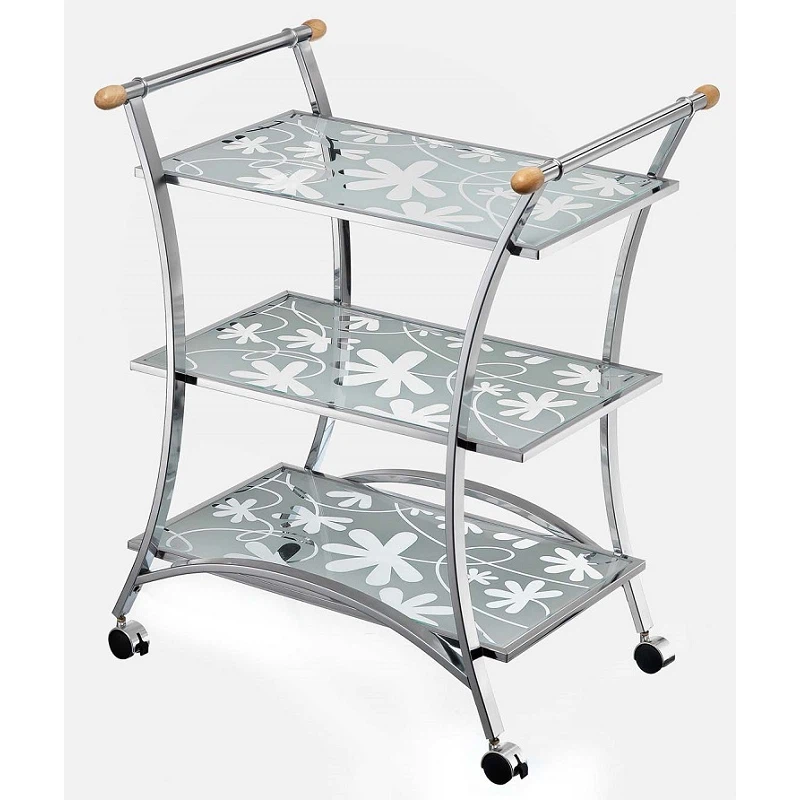
Now, let's talk about the types of serving carts that could be suitable for seafood service. We offer a range of carts that can be adapted to meet the demands of seafood service. For instance, the Elegant Mobile Wine Serving Cart might seem more focused on wine at first glance. However, its mobile nature and well - organized compartments make it potentially adaptable for seafood as well. You could install a small, portable refrigeration unit inside and use the compartments to store different types of seafood.
The Patterned Glass Bar Cart also has its advantages. The glass panels allow for excellent visibility of the contents, which is great for presenting seafood. It can be easily cleaned, and with a few modifications, such as adding a cold storage element, it can become a very functional seafood - serving cart.
Our Compact Iron Kitchen Cart is another option. Its compact size makes it suitable for smaller spaces, like a corner of a seafood restaurant. The iron construction provides durability, and it can be customized with a refrigeration system and drainage to handle seafood properly.
When it comes to the practical use of serving carts for seafood service, there are several scenarios to consider. In a high - end seafood restaurant, a serving cart can be used to bring fresh seafood directly to the table for customers to select. This interactive experience not only enhances the customer's dining experience but also showcases the freshness and quality of the seafood. In a seafood market, a serving cart can be used to display and sell ready - to - eat seafood items, such as smoked salmon or cooked shrimp.
In a catering setting, a serving cart for seafood is invaluable. It allows for easy transportation of seafood from the kitchen to the event venue while maintaining its freshness. For large events, multiple carts can be used to ensure that there is enough seafood available and that it is presented in an organized and appealing manner.
However, it's important to note that when using a serving cart for seafood, proper training is required. Staff need to know how to operate the temperature control system, clean the cart regularly, and handle the seafood properly. This includes using the right utensils to avoid cross - contamination and following strict food safety guidelines.
As a serving carts supplier, we understand the importance of providing high - quality products that meet the specific needs of our customers. Our range of serving carts can be customized to suit the requirements of seafood service. Whether you need a basic cart with simple refrigeration or a more elaborate one with advanced features for presentation, we are here to help.
If you are in the market for a serving cart for seafood service, or you have questions about how our existing carts can be adapted, we encourage you to get in touch with us. We can start a conversation about your specific needs, discuss possible modifications, and provide you with detailed information about our products. Our team of experts is ready to assist you in finding the perfect serving cart for your seafood service operations.
Engaging in a procurement discussion with us will allow you to explore all the options available and make an informed decision. We believe that the right serving cart can significantly enhance the quality and efficiency of your seafood service, whether you are a restaurant owner, a market vendor, or a caterer.
In conclusion, yes, there can be serving carts for seafood service. With the right design, materials, and features, a serving cart can meet the unique requirements of seafood in terms of storage, presentation, and transportation. Our diverse range of serving carts offers multiple possibilities for customization, and we are eager to help you find the best solution for your business.
References:
- Industry standards for food service equipment and safety regulations
- Research on the optimal storage conditions for different types of seafood
- Case studies of successful seafood service operations using serving carts